The Hidden Worlds
of Plant and Animal Cells!

Let’s warm up! Match the cell parts to their correct names.

Leaf

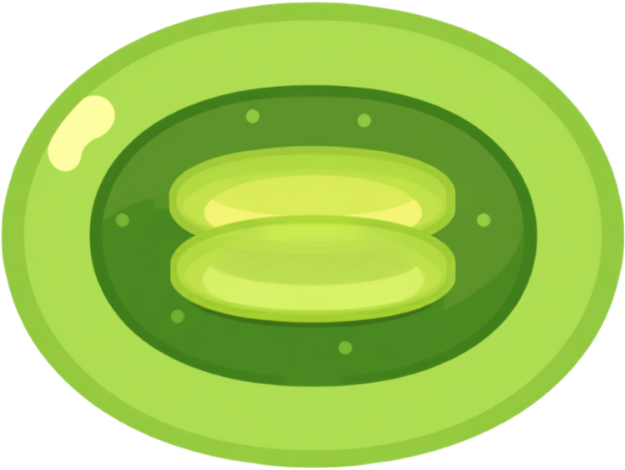
Chloroplast

Vacuole

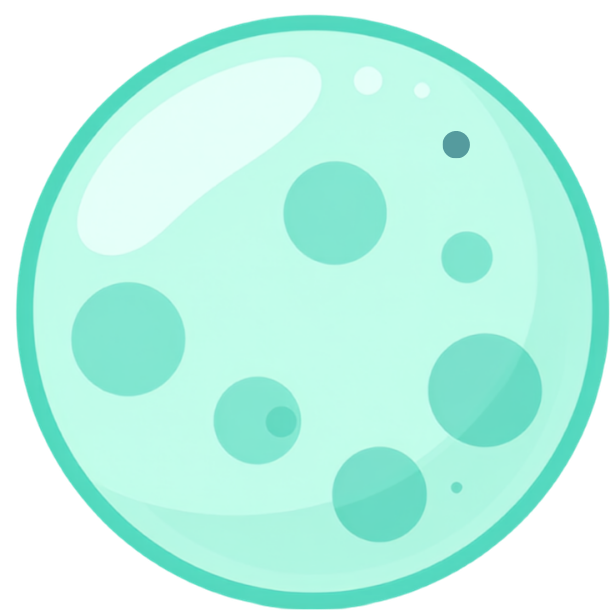
Cell
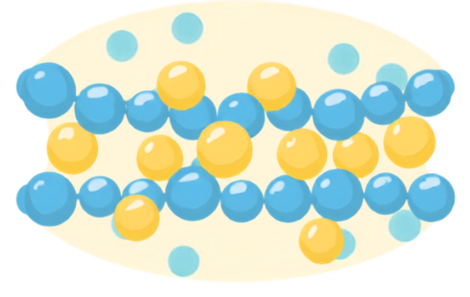
Membrane

I was lying back, watching fluffy clouds drift by, when suddenly Eli burst through one of them, spinning joyfully in the sky. “Riri!” she called, wings glinting in the sunlight. “Today’s adventure is going to be amazing!”

With excitement, I said, “Ooh, what’s the mission this time?” Eli replied, “We’re going to explore the hidden world of cells—and find out what makes plant and animal cells different! And as you know, who better to help us than Professor Poki?”
I twirled with anticipation. “I read that microscopes can show us what cells really look like. Let’s go find out more!” With a burst of energy, we zoomed off toward Professor Poki’s lab.
“Ah, Eli and Riri!” Poki said warmly, “What do you like to discover today?” We smiled and I said, “What about the cells, Professor?”. Poki thought and then said, “Cells are amazing, they are like tiny cities. Interestingly, plant and animal cells may seem similar, but each has its own unique design.”
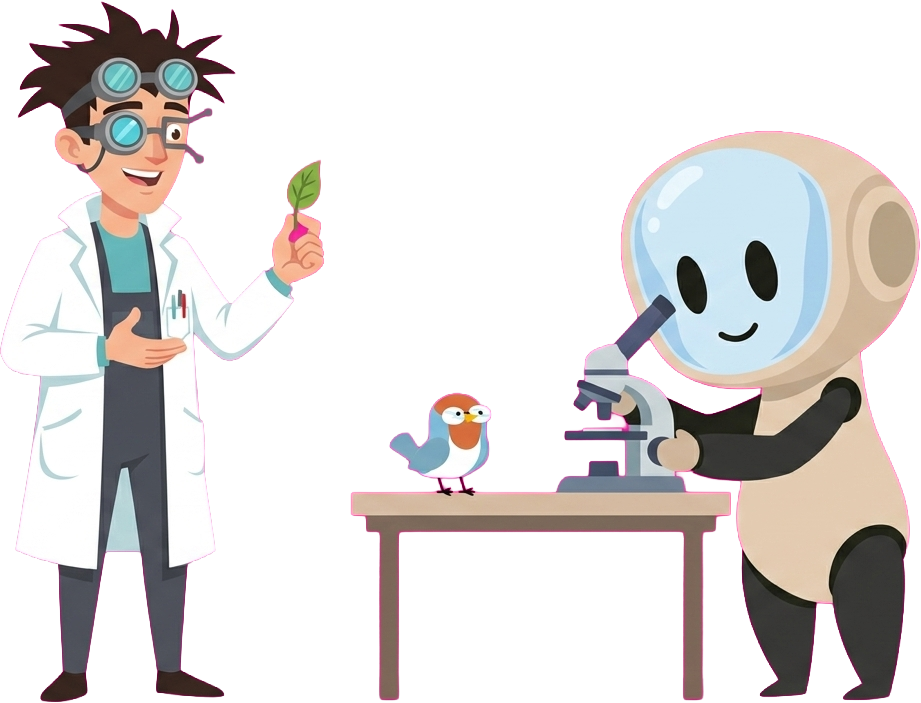
I bounced forward eagerly. “But how can we actually see them?” Poki pulled out a microscope, “We’ll need two samples—one from a leaf for plant cells, and one cheek swab for animal cells.”
Eli zipped out and returned with a fresh green leaf, while I helped set up the microscope. We placed the leaf under the lens, and I peered through the eyepiece. My lights flickered in amazement. “Whoa… I see walls around the cells!”
Poki said, “Correct! Plant cells have a rigid cell wall made of cellulose. It gives them strength and structure —like a brick wall!”
I focused on a large, fluid-filled space, and asked, “What’s this big balloon-looking part?” “That’s the central vacuole,” Poki explained. “It stores nutrients and water and helps keep the cell firm.” I squinted at small green dots. “And those?” “Those are chloroplasts,” Poki said. “They capture sunlight and turn it into energy through photosynthesis. That’s how plants make their own food.”
Eli was already preparing the next sample. “Let’s take a look at animal cells now!” she said, sliding the cheek swab under the microscope.
I leaned in again and blinked. “These cells look completely different: no walls, no green spots!” “Exactly!” Poki grinned. “Animal cells don’t have a rigid wall. Instead, they have a flexible membrane, which lets them move and change shape more easily. And instead of one big vacuole, they have smaller vesicles for storage. And no chloroplasts, animals get energy from food, not from the sun.”
Puzzled, I asked, “But… if they’re so different, how are they both called cells?”. Eli chimed in, “Yeah, does that mean they have something in common?” Poki said, “Great questions,” pointing toward the microscope.
“They do. Look here: both plant and animal cells have a nucleus. That’s the control center, keeping everything running smoothly. And see those tiny bean-shaped structures? Those are mitochondria. They’re like power plants, producing energy to keep the cell alive.”
My lights brightened, “So, plant cells make energy using sunlight, and animal cells get energy from food, but both use mitochondria to keep things running?” “Exactly,” Poki said. “They’re built differently for their environments, but they share essential tools for life.”
Eli spun in the air, her wings fluttering with excitement. “This is incredible. Plant cells are tough and built for stability, while animal cells are flexible and made for movement.” Poki nodded. “And that’s the beauty of biology. Even though they’re different, they share the same essential structures—like the nucleus and mitochondria. These adaptations help plants and animals survive in their own unique ways.” I thought aloud, “It’s like each cell type has a different toolkit for life, but they’re still working toward the same goal—survival.”
Professor Poki smiled, “Studying cells helps us understand all living things. Whether it’s a towering tree or a tiny ant, it all begins with the same building blocks.”
My circuits buzzed with curiosity. “It’s incredible how different they are—and yet still connected!” “Exactly!” said Poki. “Cells help us understand health, nature, and even the planet itself.

And thanks to tools like microscopes, we can uncover their hidden secrets.” At the end of the day, we were filled with wonder. The world inside a cell was just as amazing as the world outside.

Let’s review what we’ve learned! Choose the correct answers.
Well done! Continue to the gate.