A Drone in the Plant World
Match each garden tool with what it can do for the plants.

Watering
Can

Shovel

Robot
Arm

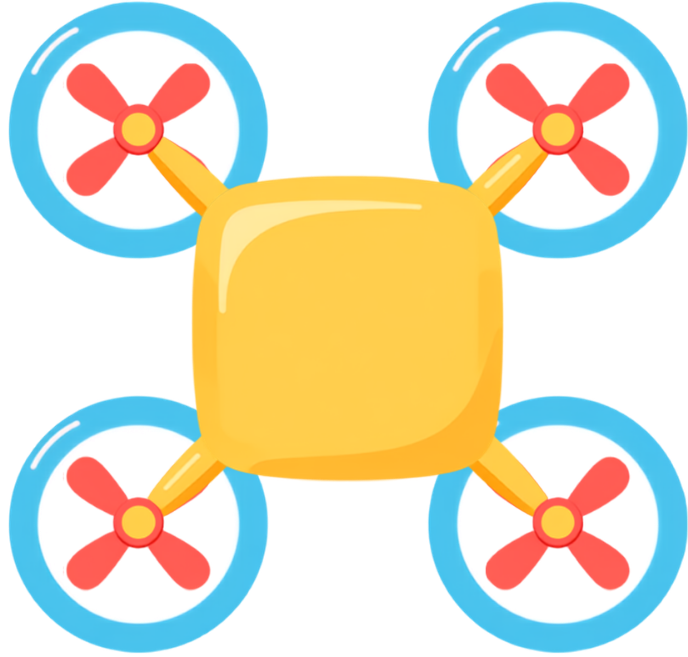
Drone

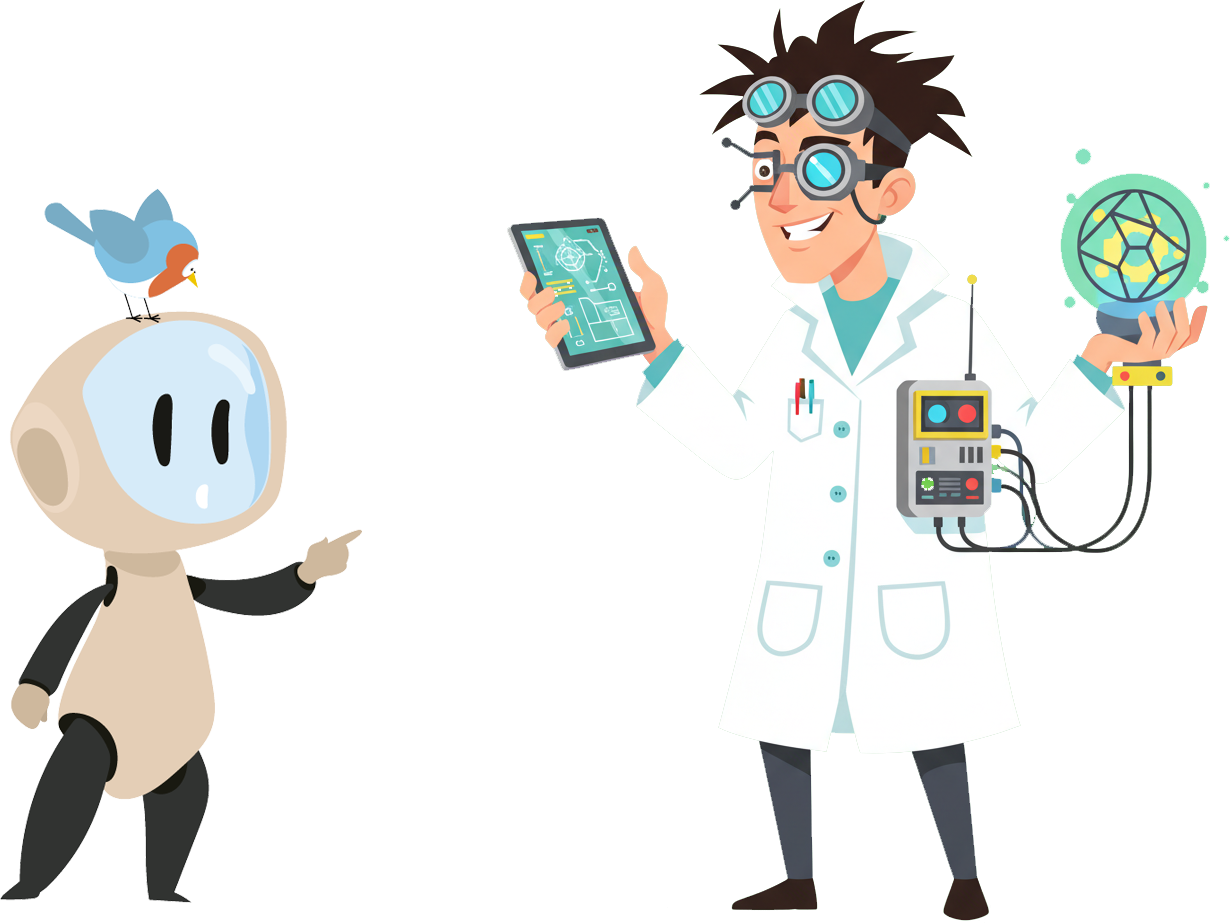
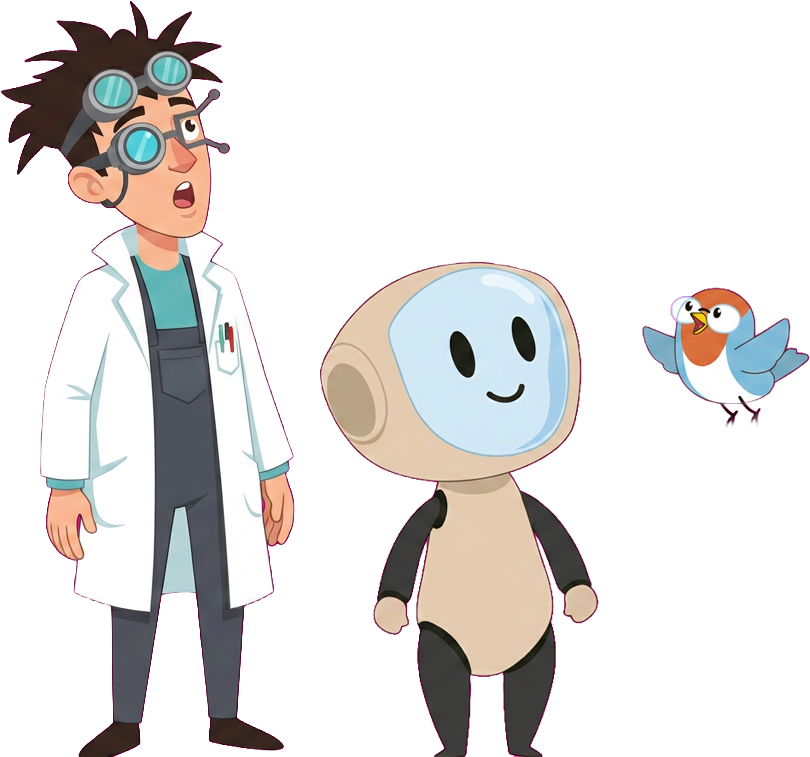
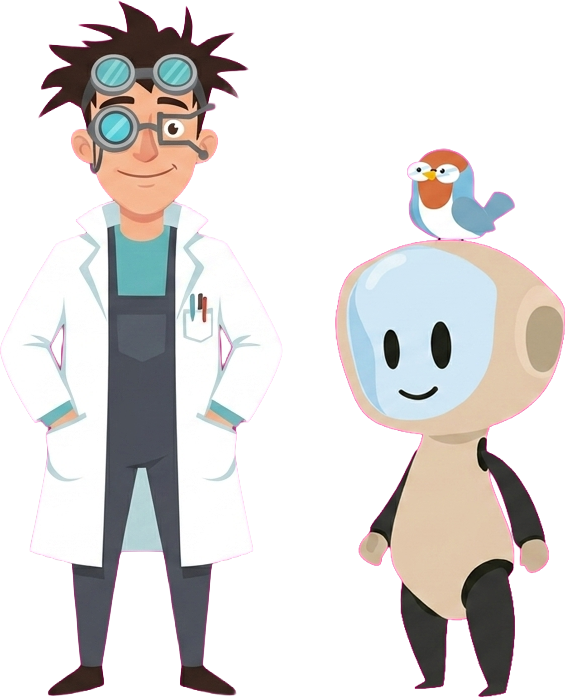
Eli and I decided to visit the “Pavilion of Knowledge” in Lisbon and met Professor Poki there. When we met him, he welcomed us warmly and invited us to visit his laboratory. As we stepped inside, our eyes widened. It was a magical place, filled with blinking lights, recycled robot parts, and plants of all shapes and sizes growing in every corner.
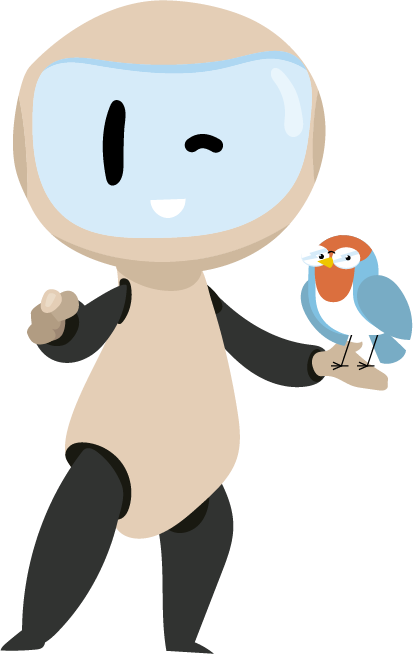
As Professor Poki tended to his garden, he suddenly frowned. “Hmm… some of these plants are wilting and have strange spots,” he muttered, scratching his head. “That’s a sign of disease. We need to save my garden!” Then, his eyes lit up. “I have an idea: a drone!
We were a bit surprised since we didn’t know what to do. Eli asked: “Can we help, Professor?” He looked up with enthusiasm and explained his plan. “Let’s build a drone that can fly over plants and collect data on their health! That way, we’ll be able to identify diseases and treat them in time!”, exclaimed the professor.
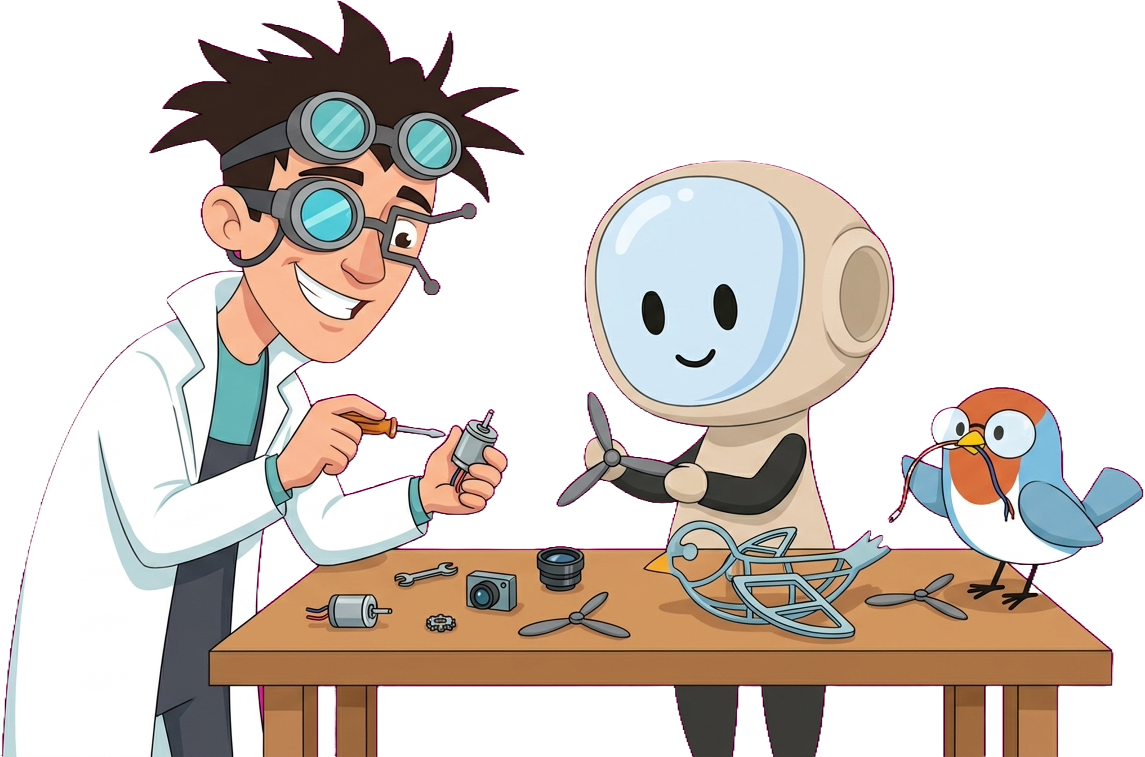
Our eyes lit up with excitement. Over the next few days, the laboratory became a veritable construction site. We gathered parts from old robots, fan motors, and recycled batteries. Professor Poki brought out a small camera he had once won in an invention competition. “We’ll also need sensors,” he said, “to detect moisture levels and possible signs of fungal infections.”
I volunteered to write the drone’s code. “I’ll handle the programming!” I said confidently. Eli took charge of the drone’s design, shaping it like a small, colorful bird.
“Let’s make it light, fast, and friendly-looking!” Bit by bit, the drone came to life. When we finally finished, it looked amazing—sleek, agile, and ready to take to the skies.
We stepped out into the garden for the test flight. Poki placed the drone gently on the ground, and I pressed the launch button. With a gentle whirrr, the drone lifted into the air and began its mission, soaring over rows of plants, snapping pictures, and collecting sensor data.
But suddenly the drone was gone, and then: beep! beep! beep!, An alarm blared from the lab. “The drone’s signal just disappeared!” Eli cried. “Could it have crashed? Or malfunctioned?”
I gasped. Professor Poki’s face turned serious as he rushed to the control room. His fingers flew across the keyboard. “We’ve lost communication… but don’t panic yet,” he said, trying to stay calm.
The seconds stretched like hours. The lab was silent except for the steady tapping of Poki’s keyboard. Suddenly, a soft hum filled the air. “It’s back!” Eli shouted.
The drone glided down and landed gently on the lab table. We all let out a sigh of relief. Professor Poki quickly connected it to his computer and began analyzing the data. “Look at this,” he said, pointing at the screen. “Here’s the soil moisture, plant temperature, and signs of disease. This is exactly what we needed!”
Using the data, Poki showed us which plants were sick and which simply needed more water. Over the next few days, we treated the affected plants with care—adjusting the watering system, adding nutrients, and trimming the infected leaves.

Slowly, the garden came back to life. Flowers bloomed again.
The air smelled fresh and green.

“Our drone is a real hero!” Eli laughed, as butterflies fluttered between the leaves. Professor Poki smiled. “This is what happens when science and nature work together.”

We learnt about the importance of caring for nature and how technology can be a great ally in this process. And thanks to teamwork! I exclaimed. The Professor smiled, proud of us. Together, we not only saved the plants, but also discovered the power of curiosity and collaboration.

Choose the correct answer for each question.

Well done! Continue to the gate.