The Hidden Geometry of Nature
Match the natural objects with their geometric shapes to discover nature’s hidden math!

Circle
Symmetry

Spiral

Hexagon

Fractal
Pattern

Eli zipped through the sky, her wings glowing in the morning sunlight. She twirled and looped with excitement, calling out, “Riri! It’s the perfect day for an adventure! Let’s go find nature’s hidden patterns!”
My lights flickered with curiosity as I soared beside her. I asked, “What do you mean, patterns?” Eli flew closer, “I read that geometry explains so much in nature—how trees grow, why flowers are symmetrical, even how animals move!

Maybe Professor Poki can tell us more.” Without wasting a moment, we raced to Poki’s lab. Inside, we found him surrounded by towering books and odd-looking tools. “Ah, Eli and Riri!”, he greeted us warmly. Eli said, “Professor, we are curious about nature and its patterns.”

Professor, with excitement, said, “You are just in time! Nature is full of incredible geometric secrets—spirals in shells, hexagons in honeycombs, symmetry in flowers… It’s like an invisible blueprint shaping everything around us.”
I leaned in, my eyes glowing. “But how do we actually see these patterns?”

Poki pulled out a magnifying glass and a prism. “The key,” he said, “is observation. For spirals, we’ll look at a snail shell. For symmetry, a flower. Let’s begin!”

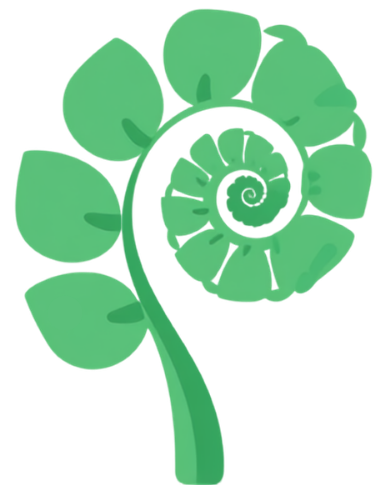
Eli darted off and returned moments later with a small snail shell. I carefully angled the prism, letting sunlight dance across the table. We examined the shell’s gentle curve. “This spiral is perfect!” I exclaimed. “That’s the Fibonacci sequence,” Poki explained. “Each number in the sequence is the sum of the two before it: 0, 1, 1, 2, 3, 5, 8, 13… Nature loves it. You’ll find these spirals in pinecones, sunflowers—even galaxies!”
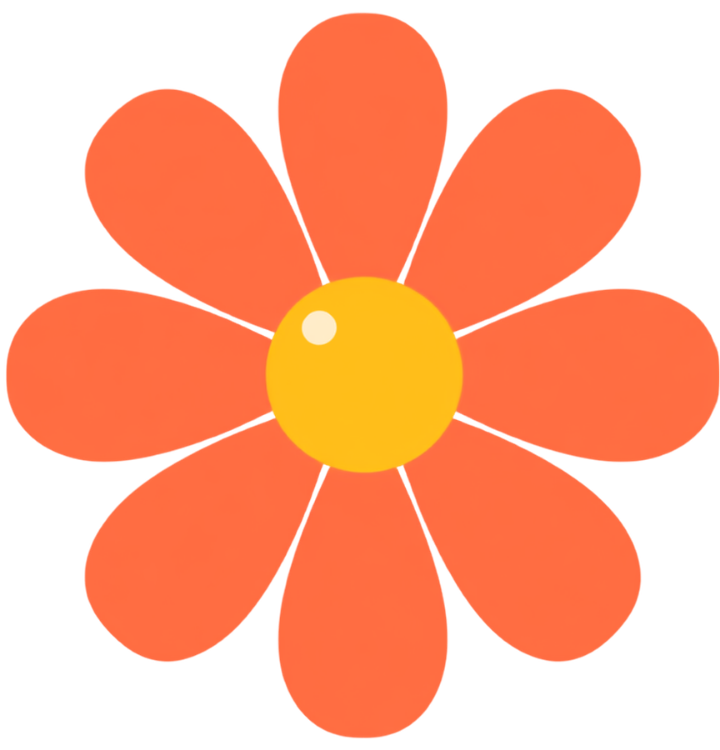
I turned to a flower nearby, admiring its evenly spaced petals. “And this?” “That’s radial symmetry,” Poki said. “It helps flowers attract pollinators and grow efficiently. Symmetry is nature’s way of balancing form and function.”

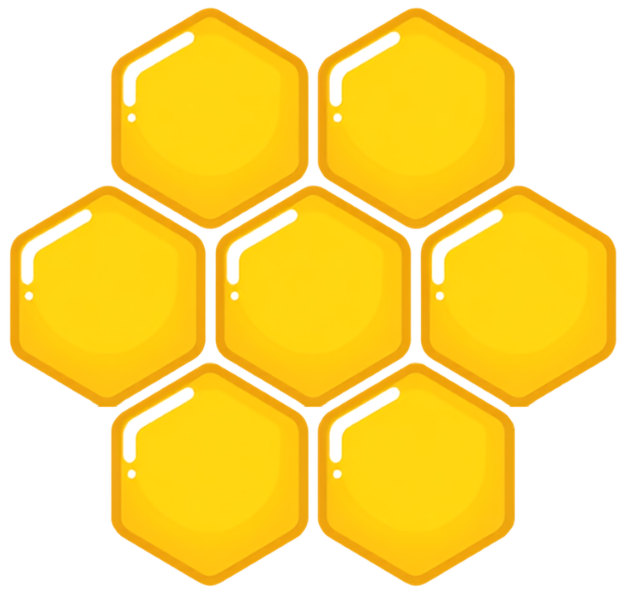
Just then, Eli spotted something above us. “Look! A honeycomb!” We all looked up at the beehive hanging from a branch. “Ah, the hexagon,” Poki said, nodding. “Bees use hexagons because they fit together perfectly, use the least material, and store the most honey. It’s geometry at its smartest.”

Eli and I exchanged astonished looks. We’d never realized how much math was woven into nature. Then I paused. “Wait… if nature follows all these patterns, does that mean everything is planned?” Poki chuckled. “Not exactly. Nature doesn’t plan—it adapts. These shapes appear because they’re the most efficient way for life to grow and survive. That’s why you see spirals, hexagons, and symmetry again and again—they help nature thrive.”
Eli fluttered her wings. “So if we understand these patterns, we can understand nature better?” “Exactly!” Poki smiled. “Geometry is nature’s secret language.”
I looked around, amazed. “So nature organizes itself with spirals, symmetry, and hexagons?” “Yes,” Poki said. “And don’t forget fractals—patterns that repeat at every scale. Look at tree branches or rivers. Big or small, the structure stays the same. Nature is both beautiful and efficient.”
Eli spun joyfully in the air. “This changes everything! I’ll never look at the world the same way again!”
As the sun dipped lower, Poki said, “Understanding nature’s geometry helps us see how everything is connected. The same patterns that shape a leaf also shape the stars.”
My lights glowed softly. “It’s amazing how something as simple as math creates such complex and beautiful designs.” Eli nodded. “And the best part? It’s not just in books—it’s everywhere!”

Let’s see what you remember from today’s adventure!

Well done! Continue to the gate.