Match the electronic components with the correct images to open the story gate
Ground
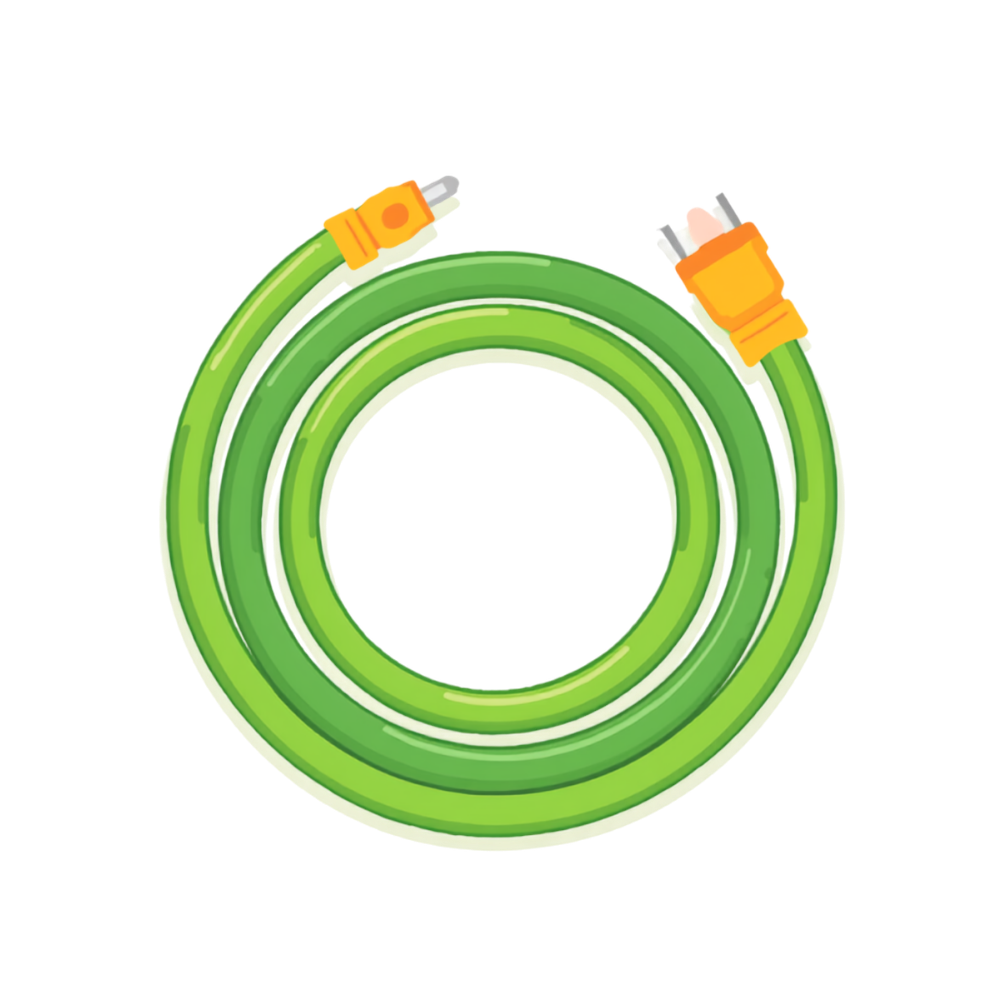
wire
Memory
Chip
Led light
Sensor
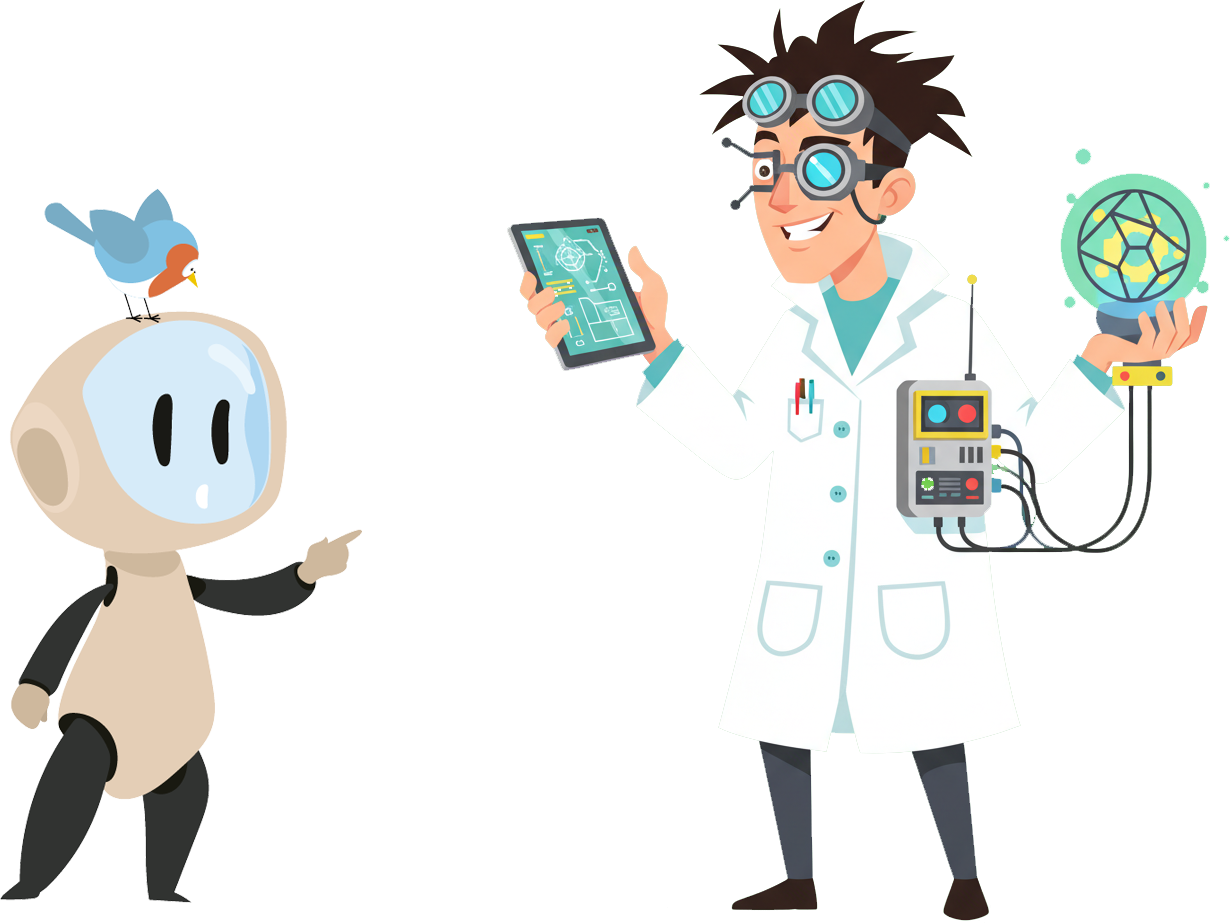
One hazy afternoon, Eli and I entered the Circuit Lab, a room filled with blinking lights, tiny circuit boards, and colourful wires. Professor Poki was at the centre of the lab. “Welcome to the Circuit Lab!” Poki said, adjusting his glasses. “Today, we’ll explore how programming and circuits can make things work!”
My eyes widened with excitement as Eli chirped, “What can we make?” Poki grinned and gestured to a table with tools, a small breadboard, and LED lights. He suggested, “Let’s start with something simple. How about we create a program to turn lights on and off?”
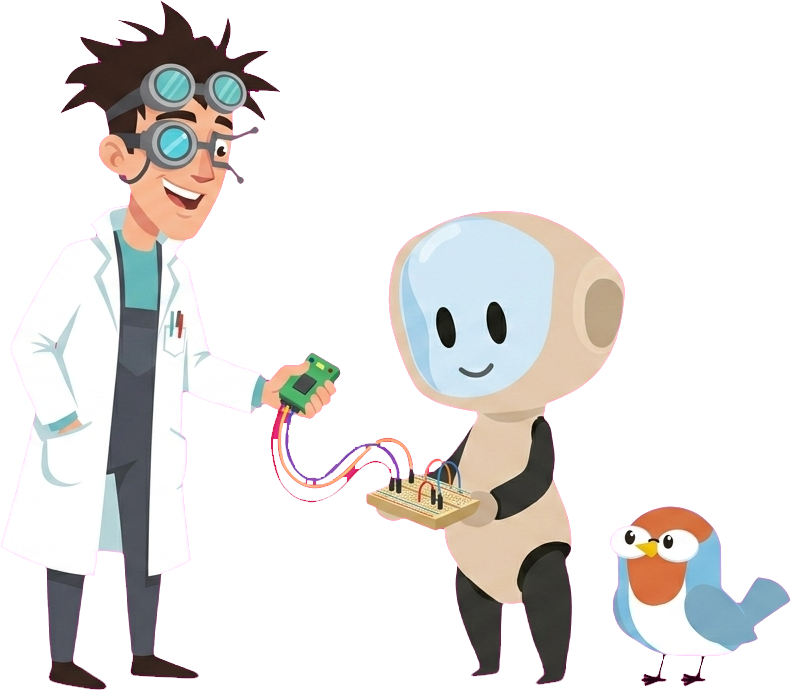
Poki guided Eli and me to the workbench. On it were LED lights, a small circuit board, wires, and a computer. “First, we’ll connect the lights to the breadboard,” he explained.
I picked up a tiny LED light, and Poki showed me how to plug it into the breadboard. I carefully inserted the light, feeling a bit like a surgeon performing a delicate operation. “This board allows electricity to flow through the circuit,” Poki said. “But to control it, we need to write a program.”
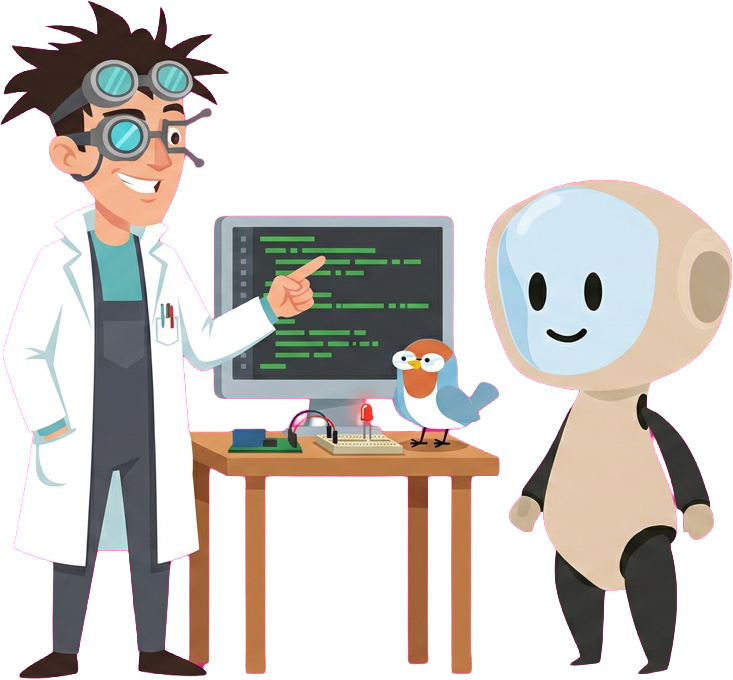
He opened a programming tool on the computer. Lines of code filled the screen, mysterious yet inviting. “Here’s the code,” he said, pointing to the screen. “This program tells the circuit when to turn the light on and off.
I leaned closer to read the commands. “What does this part do?” I asked, pointing to a line of code. “That’s a loop,” Poki explained. “It repeats the on and off commands.” Eli hopped onto the table and chirped, “So, the light listens to the program?” “Exactly!” Poki said, typing quickly. “Now, let’s upload the code to the board.” The light blinked on, then off, as the program ran. I clapped my hands in delight. “It works!” I cheered. “This is amazing!” Poki nodded. “But circuits can do even more. Let’s try adding a sensor.”
Poki handed me a small temperature sensor. “This little device can measure the temperature,” he explained. “We’ll program it to turn on an alarm if it gets too hot.” I carefully connected the sensor to the breadboard while Poki showed me how to modify the code. “If the temperature goes above 30 degrees, the alarm will sound,” Poki said, typing the condition into the program.
I ran the program, but nothing happened. I frowned. “Why isn’t it working?” I asked. Poki adjusted his glasses and examined the circuit. “Aha, it seems we forgot to connect the ground wire,” he said. “Without it, the circuit can’t complete.” I quickly fixed the connection, and we tried again. When the sensor detected heat from Poki’s hand this time, the alarm buzzed loudly. “It’s working now!” I exclaimed. Eli flapped her wings, startled by the noise. “That’s so loud!” she chirped. Poki laughed. “That’s the point! It’s an alarm, after all.”
With the alarm working, Poki suggested adding one more feature. “Let’s program the circuit to record the temperature. We will add a memory chip for this,” he said. He guided me, and I added a small memory chip to the breadboard, following Poki’s instructions. Eli balanced on my shoulder, watching intently.
Together, we wrote the code to save temperature readings every minute. Numbers scrolled across the computer screen. “Now we can see the temperature over time,” Poki explained. Eli said, “So, now we’re collecting real data!”. I ran the program and watched the data appear on the screen. “This is so cool,” I said. “We’re like real engineers!” Eli chirped in agreement, “Science and technology are amazing!”
Professor Poki smiled proudly. “You’ve learned how circuits and programming work together,” he said. I grinned. “I want to create more gadgets with circuits!” I said. “What else can we do?” Poki gestured to shelves filled with sensors and parts. “We can make lights that change color, machines that water plants, or even robots!” Eli and I exchanged excited glances. The Circuit Lab was just the beginning of our technological adventure, and we couldn’t wait to explore more.
Let’s see what you remember from today’s adventure!