Science and the Future
Before we jump into the story, let’s warm up with a few fun questions. Read the sentence and say if it is True or False.
Well done! Continue to the gate.
One morning, Eli and I went to the science museum. There we visited a laboratory full of colourful flasks and strange gadgets. I was watching Eli, who was exploring a book called History of Science.
“Eli! What’s that book about?” I asked, leaning closer.
Eli replied with a smile, “Hi, Riri! This book is about how actions in the history of science have led to groundbreaking discoveries.”
I said, “That sounds fascinating! Can you tell me more?”
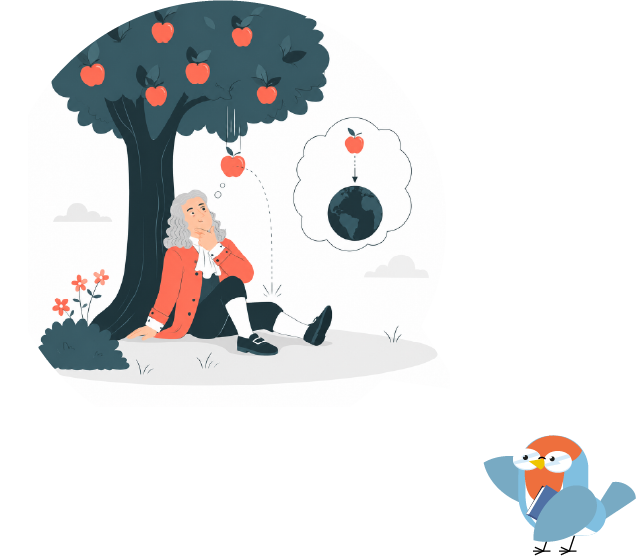
Eli said, “Of course! Let me give you an example. Think about gravity. In 1687, Isaac Newton saw an apple fall from a tree and wondered why it fell down instead of sideways or upwards. That simple observation led him to discover the law of gravity.”
I asked, amazed, “Unbelievable! What happened because of that?”
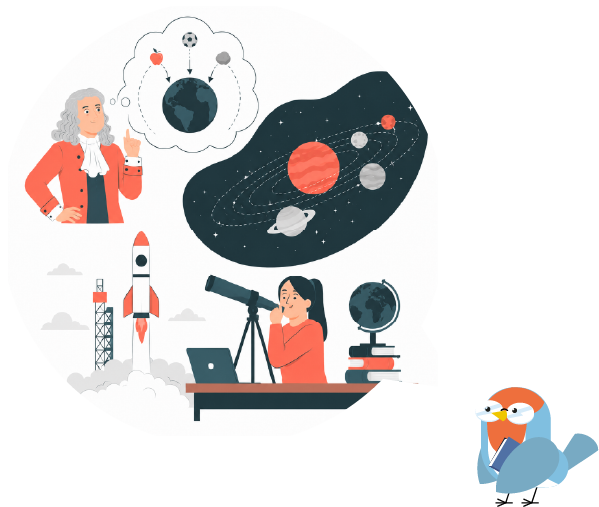
“Eli explained, “The consequences were enormous. The law of gravity helps us understand how objects move on Earth and in space. Thanks to Newton’s discovery, we’ve been able to send rockets into space and study the planets.”
“That’s incredible!” I exclaimed, “Does that mean every small action can lead to big discoveries?”
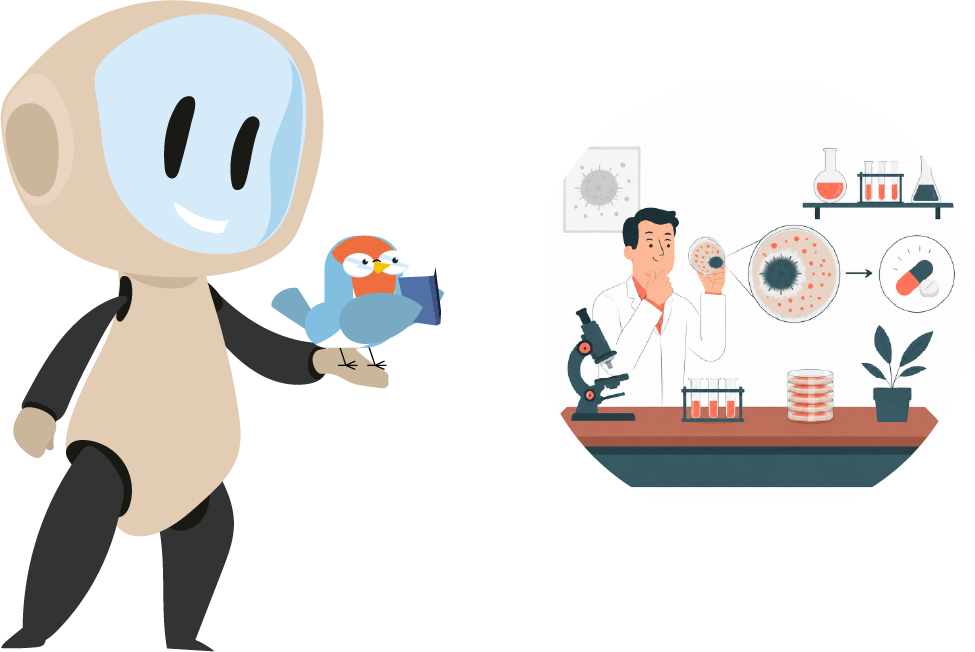
Eli explained more, “Exactly, Riri! Here’s another example. In 1928, Alexander Fleming returned from holiday and found that mold had contaminated one of his Petri dishes. Instead of discarding it, he noticed that the mold was killing the bacteria. This accident led to the discovery of penicillin, the first antibiotic!”
I paused, deep in thought. “But Eli, what if curiosity leads to something dangerous? Could some discoveries hurt people instead of helping them?”
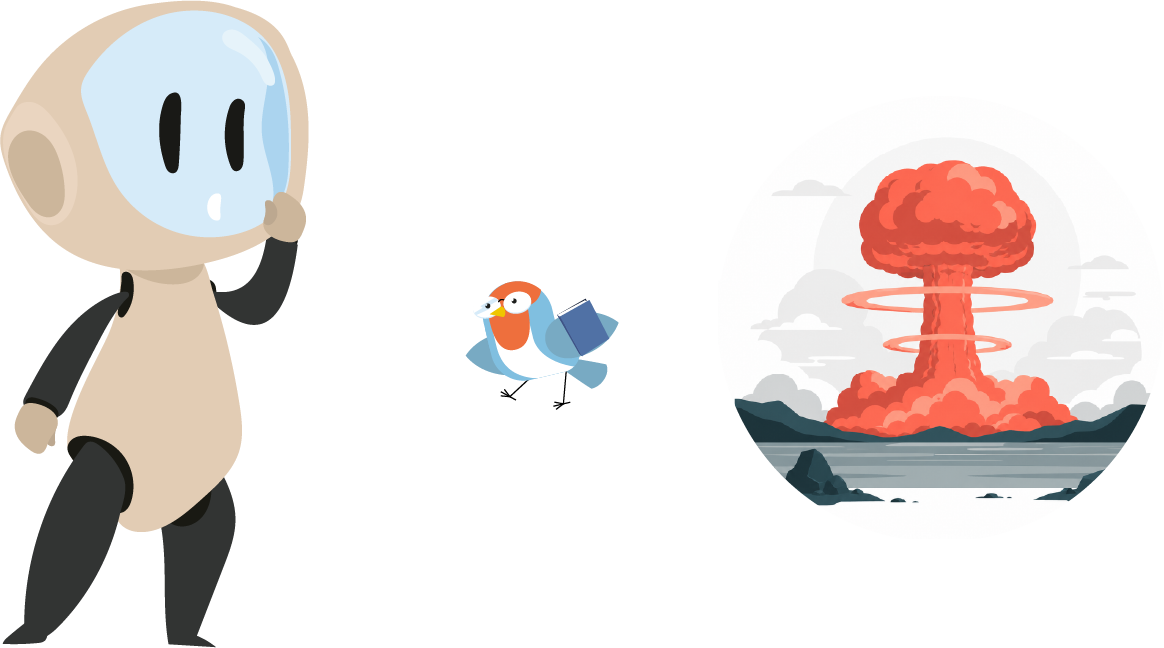
Eli’s expression grew serious. “That’s an important question, Riri. Not all scientific actions have positive consequences. For example, nuclear tests conducted in the mid-20th century helped scientists understand atomic energy, but they also caused severe environmental damage and health problems. Those tests taught us the importance of responsibility in science.”
I asked, feeling a mix of awe and concern “So… science isn’t just about making discoveries. It’s about making sure our discoveries don’t harm others?”. “Exactly,” Eli said, nodding. “Every discovery must be made with care, considering its potential impact on the world.”
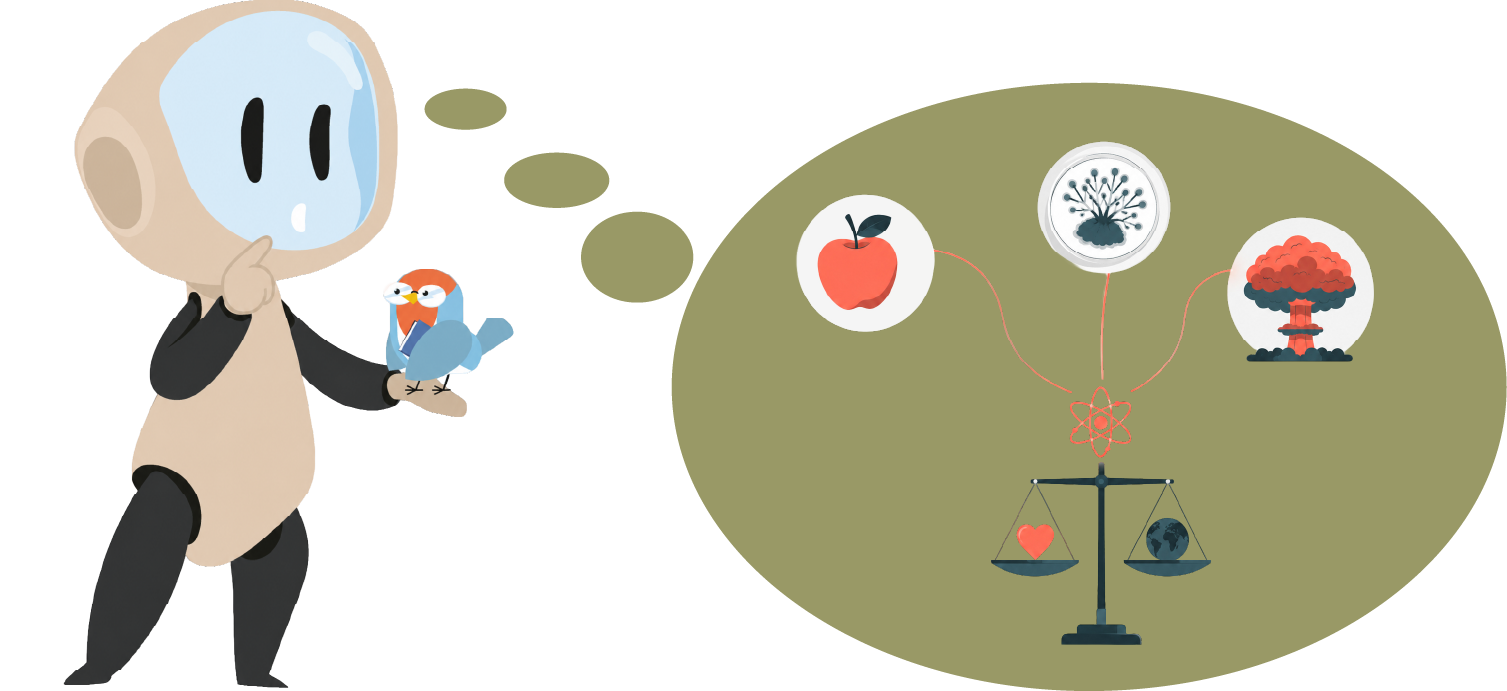
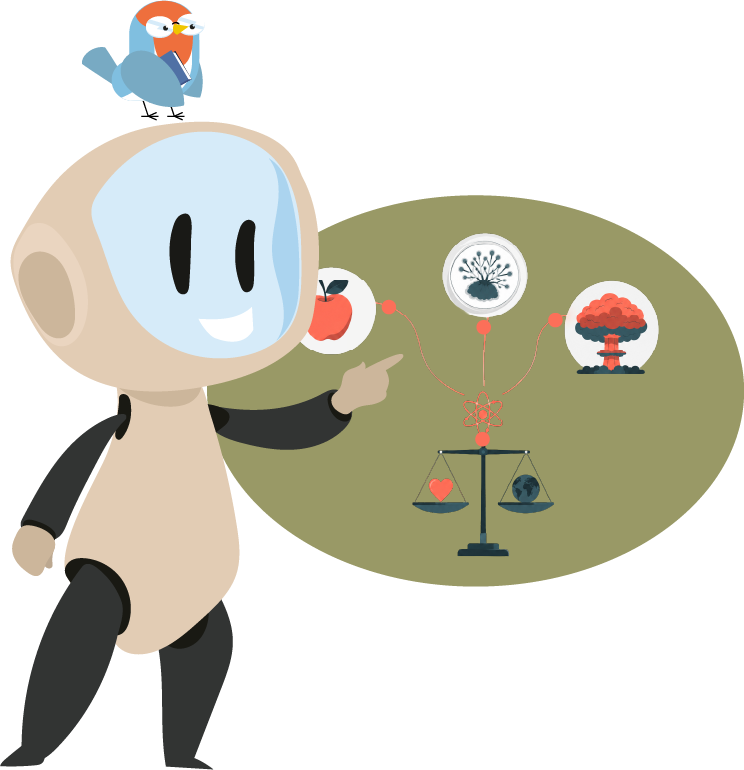
I began to connect the dots. From Newton’s apple to Fleming’s mold and the nuclear tests, I realized that science is a balance of curiosity and responsibility. I asked, “Eli, what if future scientists forget to think about the consequences of their actions?”
Then, I said, “It’s amazing, Eli. Science is like a map with endless paths, but we have to choose the right ones.”
Eli smiled warmly. “That’s a wonderful way to think about it, Riri. And you can be a part of that future—curious, responsible, and always striving to make the world better.”
“I promise, Eli! I’ll be a robot who learns with curiosity and acts with responsibility,” I said confidently.
With a sense of excitement and new understanding, Eli and I continued exploring the museum. Every corner of the lab seemed full of potential discoveries, and I knew that every action we took could shape the future in ways we couldn’t yet imagine.
Now that we’ve read the adventure, read each sentence and say if it is True or False.
Well done! Continue to the gate.